
About DTNBWED
The Dattopant Thengadi National Board for Workers Education and Development (DTNBWED), an autonomous organisation under the Ministry of Labour & Employment – Govt. of India, is a premier national body of excellence in workers education & development.
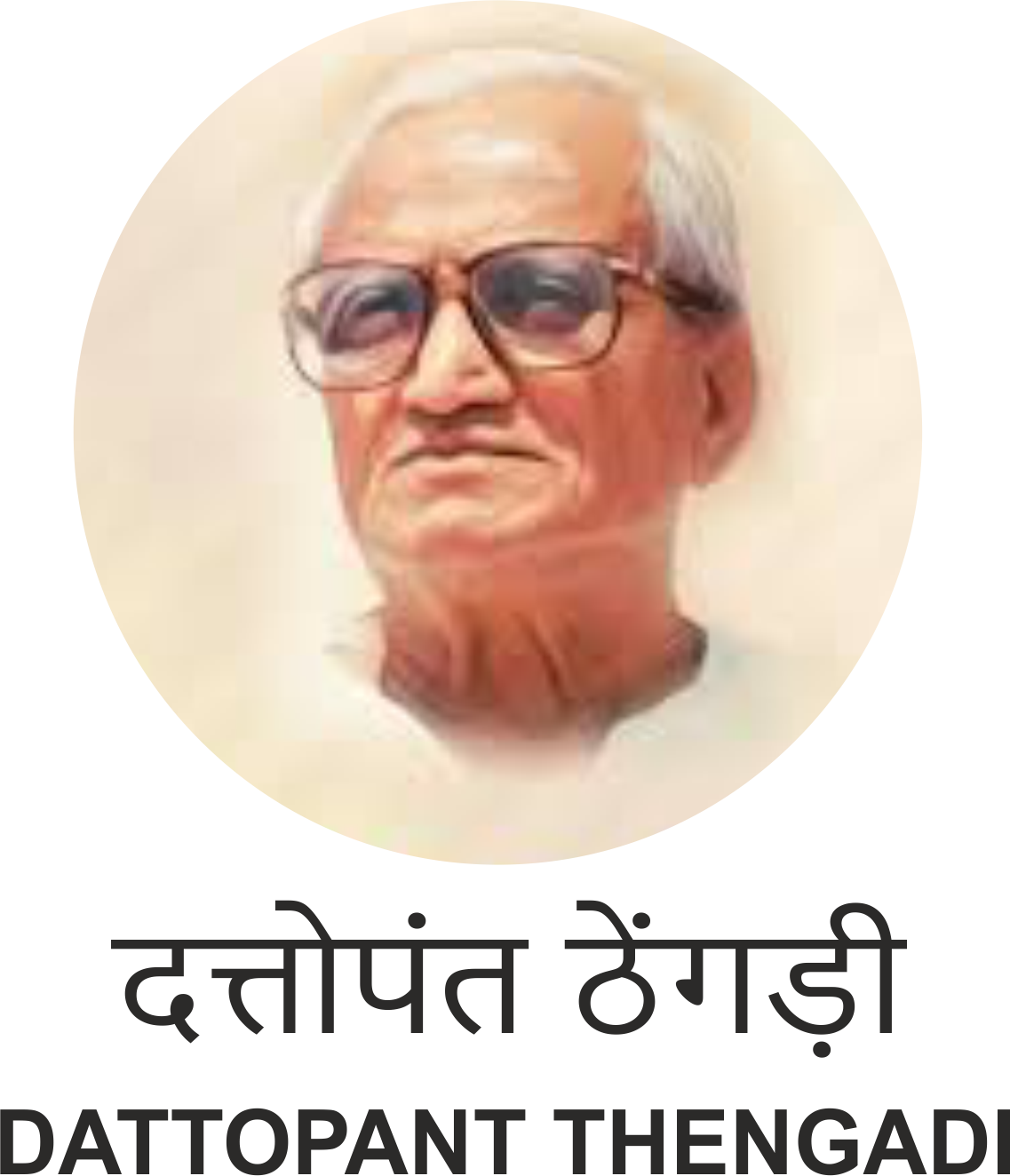
Originally established as Central Board for Workers Education (CBWE) on 16th Sept. 1958, the Board has been renamed as Dattopant Thengadi National Board for Workers Education and Development (DTNBWED) in year 2016 drawing inspiration from revered Dattopant Thengadi Ji , a great nationalist, thinker, intellectual and prominent figure in the field of labour. Thus renamed, Board has positioned itself to expand its mandate and integrate workers education scheme of Govt. of India with overall development of working class.
With the motto of ‘ Shramev Jayate’ and firm believe in ‘……the strength of a Nation lies in the well-being of its workers’, the Board has aligned its policies, programmes and other activities to strengthen labour ecosystem that ensures fair, inclusive and future-ready world of work at par with national aspirations of VIKSIT BHARAT @ 2047.
640 million strong workforce of India is a national asset and India aims to become the largest economy of the World and a developed nation by year 2047 with it. Taking workers education and development to each and every worker in organized as well as unorganized/ rural sector is a challenge and certainly a herculean task. To achieve this aim, the Board is continuously leveraging innovative, tech enabled, scalable and sustainable mass outreach training and development programmes for workers with coordinated action among Centre, States, Industry and Social Partners to ensure that the benefits of the growth are shared widely and equitably.
In the era of transformation by Shram Shakti Niti and New Labour Codes, DTNBWED is committed to uphold honour of work and workers’ welfare while enabling enterprises to grow and generate national productivity and prosperity. The DTNBWED endeavors to widen the awareness of the workers and exposes them to the best practices in the employment, industry and government and trains them for Productivity & Quality Management, Nation Building and Constructive Trade Unionism. Board has also undertaken several innovative skill development initiatives across the country to develop future ready-workforce. Board is also Awarding Body for NSDC.
In unorganized sector also, the Board is playing a vital role in bringing consciousness among workers about their rights, duties and responsibilities, and trains them on importance of education and skill training for better livelihood, importance of digital and financial literacy, need for occupational health and safety, social security, etc. Board organizes special awareness campaigns at labour chowks , labour basti, construction sites and other such places where unorganized workers/ platform & gig workers etc. frequently flock. These campaigns aim at formalization of informal sector workers through E-Shram registration and also links them with various welfare and developments schemes of the Central/ State Governments.
The Board is led by a highly motivated, committed and professionally competent team of officers and staff. It has it's Headquarter at New Delhi and a network of 50 Regional Directorates all over the India with spirit to take workers education and development service to every work space of India.
- History of Workers Education
Workers' education in ancient India was primarily vocational, practical, and hereditary, focused on passing down specialized skills within families and guilds rather than through formal, academic, or institutional schooling. It was deeply rooted in the caste system, where the Varna (social division) often determined the occupation, and education served to prepare individuals for their specific vocational roles in society.
The most common form of workers education in ancient India was learning from one's father, where skills were passed down from generation to generation. Sometimes Young workers were attached as apprentices to a master craftsman or teacher to receive on-the-job training. Gurukuls in ancient India provided holistic education that blended intellectual study with vocational training (kriya shakti) to ensure self-reliance. Key crafts taught included agriculture, animal husbandry, pottery, woodworking, weaving, metallurgy, and sculpture, along with skills like Ayurveda, weaponry, and textile production. Trade guilds (Mahajani/ Shreni) also played a significant role in organizing, regulating, and training craftsmen and artisans. Trainee craftsmen acquired vocational skills and also learnt trade secrets and work ethics. Shukra Niti and Kautilya’s Arthshashtra provided comprehensive framework for workers education in ancient India outlining labour management, emphasizing fair wages, humane treatment, protection of worker’s welfare, set of rules for work place safety and dispute resolution to maintain economic stability and prevent social disruption.
Present form of Workers' education in India originated in the late 19th century through welfare efforts by social reformers, such as night schools started by social reformers like C.P. Majumdar (1872) and Sasipada Bannerjee's "Working Men's Club" (1870) in Bengal. Sasipada Bannerjee also established a newspaper Bharat Sramajivi which was the first Indian journal of the working class and its circulation peaked at 15,000 copies a remarkable number for its time. The Brahmo Samaj established a Working Men's Mission in 1878 and established several schools for working men and the depressed classes. Narayan Meghaji Lokhande organized the Bombay Millhands’ Association in year 1890 and published Dinbandhu for worker’s awareness in 1898. Narayan Malhar Joshi founded Social Service League in 1911 and started specialized training classes for social work and workers' welfare in 1924.
After Independence, During India’s Second Five-Year Plan, planners realized that a democratic country like India needs active and informed participation of workers in trade unions and national economic activities to achieve desired socio-economic progress. A strong, free, responsible, and democratic trade union movement would greatly help improve workers’ lives. Workers needed educational training to perform their roles effectively in the country’s socio-economic development. It was resolved that Workers Education would prepare workers and their unions to contribute meaningfully to nation building. This led the Government of India in 1957 to seek expert advice for creating a “Workers Education Scheme.” A Team of Experts submitted its report in March 1957. The report was approved by the Indian Labour Conference at its 15th session in July 1957. The Conference recommended setting up an autonomous tripartite Board to administer the Workers Education Scheme in India. Accordingly, the Central Board for Workers Education (CBWE) was established on 16th September 1958 and registered under the Societies Registration Act XXI of 1860. In Year 1970, CBWE established Indian Institute of Workers Education at Mumbai as the apex training institution of the Board to organize specialized workers education courses and seminars for the representatives of Central Trade Union Organizations/Federations and their affiliated Associations.
In 2016, Central Board for Workers Education (CBWE) renamed itself as Dattopant Thengadi National Board for Workers Education and Development (DTNBWED) taking inspirations from life of legendary trade union leader Shri Dattopant Thengadi ji. Board expanded its mandate, intensified its focus on skill development and integrated workers education with overall development of working class. The board follows a multi-disciplinary and multi-stakeholder approach, emphasizing partnership and participation to uplift the working class of India through its diverse programs focused on education, research and training. Currently, the Board is actively engaged in awareness generation, sensitization and capacity building of workers on trade unionism, industrial peace, productivity & quality consciousness, decent work, labour codes, HRD, technical and behavioural skills for employability, and other related issue. Board is also organizing large scale campaigns for registering workers under flagship schemes of government for welfare and development.
- Need of Workers Education
One of the fastest-growing economies, a digitised, automated, and sustainable economy, a booming global powerhouse- India is set to be a primary engine of growth in the coming years. Owing to its demographic dividend, India is amongst countries that will supply nearly two-thirds of new workforce entrants in the coming year. (World Economic Forum’s Future of Jobs Report 2025).
As per the Ministry of Labour & Employment – Govt. of India, the employment in India rose to 643.3 million in year 2023-24 as compared to 475 million in year 2017-18 which is a net addition of 168.3 million jobs over six years, reflecting the government’s focus on youth-centric policies and its Viksit Bharat vision.
Report of Press Information Bureau, New Delhi on Indian workforce, Oct. 2025, highlights that today 64.2% of Indians are of working age and for the next decade, this share will stay close to 65% giving India one of the world’s most favourable demographic profile. At present, India is witnessing the rapid emergence of new industries and employment domains, driven by technological innovation, globalization and evolving consumer behavior. Sectors such as health care technology, e-commerce logistics, financial technology, and edu-tech are growing at an unprecedented pace. Job market is witnessing increase in wages of casual labourers as well as that of salaried workers, unemployment rate has declined sharply in last six years suggesting stronger workforce absorption in to productive employment.
Therefore, in the light of rapidly expanding Indian workforce, Workers’ education in India is not just useful— in fact, it’s essential for building a fair, productive, and modern workforce. Many workers, especially in informal sectors, still lack awareness of their rights, safety standards, and opportunities for skill development. Here’s a clear breakdown of why workers education in present labour ecosystem matters :
1. Awareness of Rights and Laws
A large number of workers are unaware of protections under laws like the Code on Wages, 2019 and OSH & WC Code, 2020. Workers Education helps them understand wages, working hours, benefits, and legal remedies against exploitation. They also learn about various labour welfare and development policies, programmes and schemes of the government.
2. Skill Development and Employability
With rapid industrial and technological change, workers need updated skills. Government initiatives like Skill India Mission, PM-VIKAS, EPEP aim to improve employability, but awareness and participation depend on effective workers education.
3. Improved Productivity
Educated workers tend to be more efficient, adaptable, and innovative. This benefits not only individuals but also industries and the overall economy.
4. Health and Safety Awareness
Workplace accidents often occur due to lack of knowledge. Education helps workers understand safety procedures, use of equipment, and occupational health practices.
5. Social and Economic Empowerment
Workers’ education promotes confidence, decision-making ability, and participation in unions and community life. Organizations like DTNBWED have played a key role in spreading such awareness.
6. Reduction of Exploitation
Illiteracy and ignorance make workers vulnerable to unfair wages, bonded labor, and poor working conditions. Education acts as a safeguard against such exploitation.
7. Adaptation to Economic Changes
With globalization and digitalization, workers must adapt to new systems, technologies, and job roles. Education enables smoother transitions and reduces unemployment risks.
8. Strengthening Democracy
Informed workers are more likely to participate in democratic processes, understand policies, and demand accountability from employers and the government.
Thus, Workers’ education in India is not just about literacy—it’s about empowerment, dignity, and economic progress. Expanding access to training, awareness programs, and lifelong learning opportunities is crucial for national and inclusive development.
- Our Legacy
The legacy of the Central Board of Workers Education (CBWE) which is now known as Dattopant Thengadi National Board for Workers Education & Development (DTNBWED) is closely tied to the national development, growth of worker awareness, industrial harmony, and grassroots education in India. Established in 1958 as an autonomous body under the Ministry of Labour and Employment, it has spent over six decades promoting trade union consciousness, industrial peace, and social responsibility among workers in organized, unorganized, and rural sectors. It has played a foundational role in shaping informed and responsible trade unionism in India.
Key aspects of Board’s legacy are :
1. Worker education and empowerment
Board focused on educating workers—especially those in the unorganized sector—about their rights, duties, and social responsibilities. It helped workers better understand labour laws, safety, welfare schemes, and democratic participation.
2. Promotion of responsible trade unionism
It aimed to develop constructive and democratic trade union leadership from the ranks and files of workers themselves, reducing conflict-driven approaches and encouraging dialogue between workers and management.
3. Industrial harmony
Through training programs, workshops, and awareness campaigns, Board contributed towards reducing industrial disputes and promoting cooperation in workplaces.
4. Inclusion of marginalized sectors
A major contribution was extending education to rural workers, women, and weaker sections, helping them to integrate into the formal framework of labour rights and welfare.
5. Support for national development
Board linked worker education with broader national goals such as productivity, social justice, and economic development—especially during India’s early planning phases. After adoption of new economic policy in 1992, India embarked on the journey of major economic reform through Liberalization, Privatization and globalization. In new industrial scenario, Workers Education Board played an important role by training workforce into latest productivity and quality techniques such as Kaizen, quality circles, 5-S, Six Sigma etc., and also equipped them with commensurate behavioural skills by training them on work culture and work ethics, Team Work, communication, creative decision making, conflict management etc.
6. Transformation into Dattopant Thengadi National Board for Workers Education and Development
In 2016, Central Board for Workers Education (CBWE) was renamed as the Dattopant Thengadi National Board for Workers Education and Development (DTNBWED), reflecting an expanded mandate that includes skill development and capacity building alongside traditional worker education.
Overall impact
The legacy of Workers Education Board lies in building an informed workforce, strengthening labour-management relations, and promoting social awareness among workers. It remains a key institution in India’s labour education framework, adapting over time to meet changing economic and workforce needs.